
Imagine waking up to a loud alarm. Your mind is already racing with emails before you even get out of bed. You grab a coffee, skip breakfast, and rush into a busy day.
This cycle feels normal, but your body is crying for a break. Modern living often takes us away from our natural rhythm. We feel drained and disconnected.
Your sleep might suffer, and your patience might wear thin. It is not just in your head. Your body has a natural healing power, but it’s buried under stress.
Starting an ayurvedic lifestyle for stress relief can help you find your true self. This ancient wisdom can help you regain your health and find peace in a busy world. You deserve to feel alive and balanced again, starting today.
Key Takeaways
- Modern habits often disrupt your body’s natural equilibrium.
- Chronic pressure impacts your physical and mental well-being.
- Your body holds an innate intelligence waiting to be restored.
- Ancient practices provide a foundation for lasting health.
- Small, intentional changes lead to a more vibrant existence.
Understanding the Impact of Modern Stress on Your Body
The world moves fast today. This speed affects your health. You might feel stressed from constant alerts and tight deadlines.
Your body wasn’t made for this stress. It’s always on high alert. This is not good for you.
Ignoring these signs hurts your body. Stress management through ayurveda helps. It sees your symptoms as a call for help.

The Vata Imbalance in a Fast-Paced World
Ayurveda talks about Vata, the energy of change. Too much speed can make Vata too high. You might feel scattered.
Vata imbalance shows as anxiety and racing thoughts. It makes you feel wired but tired. Knowing this is key to feeling better.
Recognizing Physical and Mental Signs of Burnout
Burnout builds up slowly. It shows as constant tiredness and digestive problems. These signs mean your body is stressed.
Insomnia is another sign. If you can’t sleep, your body is stressed. Ayurvedic stress management tips can help.
| Symptom Category | Balanced State | Imbalanced State |
|---|---|---|
| Mental Clarity | Focused and calm | Anxious and scattered |
| Digestion | Regular and light | Bloated or irregular |
| Sleep Quality | Deep and restorative | Restless or insomnia |
| Energy Levels | Steady and vibrant | Chronic fatigue |
Embracing an Ayurvedic Lifestyle for Stress Relief
True wellness starts when you work with your natural rhythm, not against it. An ayurvedic lifestyle for stress relief is not about strict rules. It’s about finding habits that make your body and mind happy in a busy world.
Defining Your Unique Mind-Body Constitution
In Ayurveda, your body and mind type is called your dosha. Knowing if you’re Vata, Pitta, or Kapha helps you understand your strengths and weaknesses. This lets you find wellness that fits just right for you.
Knowing your dosha helps you see when you’re out of balance before it’s too late. You learn which foods and activities calm you down and which ones make you stressed. Personalization is the key to real health progress.
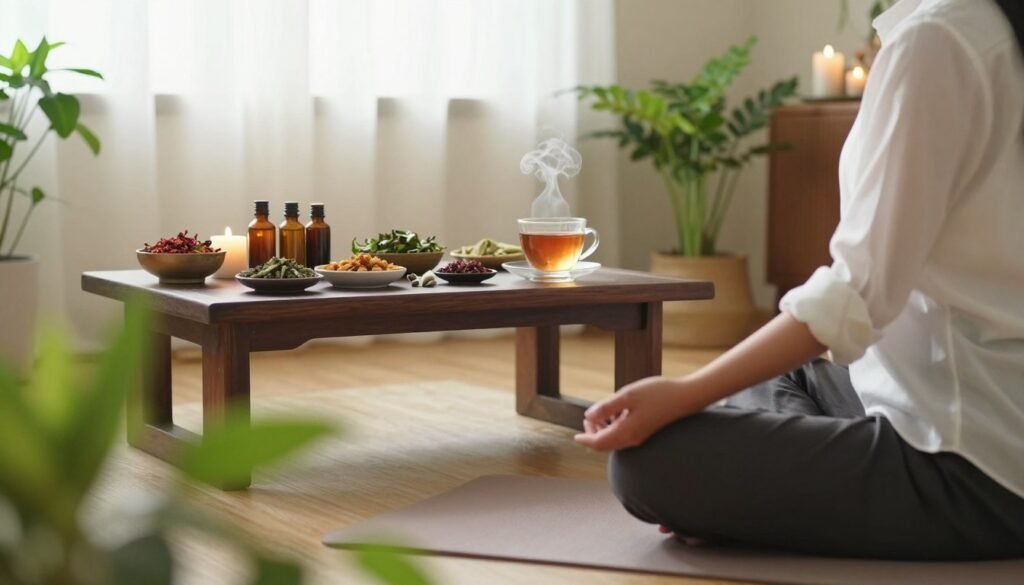
The Core Philosophy of Living in Rhythm with Nature
The core of Ayurveda is living in sync with nature’s cycles. This means aligning your day with the sun and seasons. It helps your body’s internal clock and reduces stress. Holistic stress relief ayurvedic practices keep your energy steady all day.
Start by matching your sleep and meals with the sun’s rise and set. This helps your body relax and digest better. By making these ayurvedic lifestyle changes for stress relief, you build a strong base for lasting health and calm.
Establishing Daily Rituals for Grounding Your Energy
Modern life can be chaotic. But, you can ground your energy with daily rituals. These ayurvedic stress management tips help you stay calm, even when things get busy.

Morning Routines to Set a Calm Tone
How you start your day sets the tone. Try not to check your phone first. Instead, enjoy a few minutes of silence or gentle movement.
Drinking warm water with lemon or doing some mindful breathing is great. These small, intentional actions show you’re in charge. They help you feel strong before the day gets busy.
Evening Practices to Signal Rest and Recovery
When the sun sets, your body gets ready to rest. Evening ayurvedic lifestyle changes for stress relief help you relax. A calm evening routine is key for good sleep.
Try massaging your feet with warm sesame oil or having herbal tea. These soothing habits tell your body it’s okay to relax. They help your mind and body heal while you sleep.
The Importance of Digital Detox Before Bed
Blue light from screens can mess with your sleep. Turn off all devices at least an hour before bed. This lets your brain calm down without distractions.
Instead of scrolling, read a book or stretch gently. You’ll sleep better right away. Keeping your evenings quiet is crucial for your health.
Nourishing Your Nervous System Through Diet
Your meals can help you feel calm and balanced. When you’re stressed, what you eat matters a lot. Eating the right foods helps your body stay calm all day.
Choosing Warm and Grounding Foods
Choose foods that are warm and oily for your health. These foods help fight stress. Think of soups, steamed veggies, and warm grains as your calm helpers.
Stay away from cold salads and iced drinks. They can make you feel worse. Add healthy fats like ghee or olive oil to make you feel better.
Mindful Eating Habits to Improve Digestion
Eating mindfully is key. It helps your body relax and digest better. Eating with care lowers stress and helps you absorb nutrients better.
- Sit down in a quiet space without screens or distractions.
- Chew your food thoroughly to signal your digestive system to prepare for work.
- Express gratitude for your meal to cultivate a positive mental state.
Herbal Allies for Natural Stress Relief
Nature has herbs that help you feel calm. These herbs support your nervous system. They help you handle stress better.
Try these herbs in your daily routine:
- Ashwagandha: Helps manage stress and fatigue.
- Brahmi: Soothes the mind and improves focus.
- Tulsi: Promotes peace and balance.
Using these herbs helps you stay healthy. Pick one or two that fit your life. Your nervous system will appreciate it.
Integrating Movement and Breathwork into Your Schedule
Changing how you move and breathe can calm your nervous system. When you’re stressed, your body holds tension. Holistic stress relief ayurvedic practices help release this tension.
Gentle Yoga Poses to Release Tension
Moving your body helps release stress from your muscles. Focus on poses for your hips, shoulders, and neck. Child’s Pose and Cat-Cow stretches are great for calming your body.
Hold these poses for deep breaths. Even five minutes can calm your nervous system. Being consistent is more important than how hard you move.
“Breath is the bridge which connects life to consciousness, which unites your body to your thoughts.”
Pranayama Techniques for Immediate Calm
Pranayama, or controlled breathing, is a great ayurvedic technique for stress reduction. You can do it anywhere. It helps calm your heart rate.
Nadi Shodhana, or alternate nostril breathing, balances your brain. It keeps you calm, no matter what’s happening around you.
Sama Vritti, or box breathing, is another helpful method. It signals to your brain that you’re safe. Adding these habits to your day keeps you centered, even when you’re busy.
Overcoming Common Obstacles to Your Ayurvedic Practice
Changing your health doesn’t need a big change right away. It’s normal to feel stressed when adding new things to your busy life. Start with small, manageable shifts to build a strong base.
Starting Small to Ensure Long-Term Success
Success comes from being consistent, not intense. Don’t try to change everything at once. Start with one easy habit in the morning or evening. This makes stress management through ayurveda feel welcoming, not a burden.
“The journey of a thousand miles begins with one step.”
Starting small helps you avoid burnout from big changes. Begin with simple things like drinking warm water or taking a few minutes to breathe deeply. These small steps add up and improve your health a lot.
Adapting Ancient Wisdom to a Busy American Schedule
It might seem hard to fit these practices into a busy life. The trick is to make ayurvedic techniques for stress reduction fit your schedule. You don’t need lots of free time to see benefits.
Here’s a table to help you add these practices to your day:
| Obstacle | Simple Solution | Time Required |
|---|---|---|
| Lack of time | Mindful breathing during commute | 2-3 minutes |
| Social pressure | Choose warm, cooked snacks | Instant |
| Old habits | Set a phone reminder | 1 minute |
Social pressure can be tough, especially when eating out or at events. You can still take care of your body by making conscious choices that boost your energy. By focusing on your health, you become stronger and better at handling life’s demands.
Conclusion
Your journey to wellness starts with small, daily choices. An ayurvedic diet gives your body the fuel it needs. This helps you thrive in today’s busy world.
Being consistent is key to your success. Simple ayurvedic rituals in your morning and evening routines help your nervous system. These habits are like a gentle anchor when things get tough.
You can change your health with natural ayurvedic remedies. These practices help you find your natural balance. Every step you take brings you closer to peace and grace.
Begin by choosing one habit that fits your needs today. Share your journey with friends or family for support. Your path to wellness is a journey of returning to yourself.